How to Build a Cultivation Facility in Minnesota
Join our free masterclass to learn how to efficiently build a cost-efficient cannabis cultivation facility in Minnesota and access energy incentives.
Read MoreBuild a Commercial Cannabis Cultivation Facility Designed for Success

A cannabis license is only the first step. Turning that opportunity into a successful cultivation operation requires thoughtful planning, the right infrastructure, and a facility designed around production goals, regulatory requirements, operational efficiency, and future growth.
Facility layout, lighting, HVAC, electrical systems, irrigation, and environmental controls all impact yield, operating costs, energy efficiency, compliance, and crop consistency.
TSRgrow partners with cannabis cultivators in Minnesota, architects, engineers, and contractors to help plan and integrate high-performance cultivation facilities. Whether you are working with an existing design team or need cultivation-specific expertise, we help integrate the systems and technologies required for efficient, scalable production.
From initial facility planning through cultivation operations, TSRgrow helps Minnesota operators build cultivation environments designed for long-term performance.
Minnesota cannabis operators entering the regulated market must navigate several application, approval, and facility-development stages before beginning commercial cultivation.
Understanding the process can help applicants prepare for local approvals, facility planning, construction, inspections, and final licensure.

February 18, 2025
The application window opened for social equity and general cannabis business license applicants.

March 14, 2025
The deadline for submitting MN cannabis license applications officially closed.

June 5, 2025
OCM completed the first license lottery for cultivator, manufacturer, mezzobusiness, and retailer applicants.

July 22, 2025
A secondary lottery was held for qualified general applicants seeking cannabis retail licenses.

Now
OCM is accepting and reviewing applications for lower-potency hemp edible (LPHE) manufacturer, retailer, and wholesalers, event organizer, and testing facility licenses on a rolling basis
Minnesota cannabis applicants generally have 18 months after receiving preliminary approval to complete local government approvals, submit final plans of record, prepare their operating location, complete the pre-licensure inspection, and obtain a full business license.
This is a licensing and facility-development deadline—not a guaranteed opening date. Starting early can help prevent delays involving zoning, permitting, engineering, construction, equipment installation, and state approval.
Local Approvals
Confirm the operating location and complete applicable zoning, building, fire code, permitting, and municipal requirements. Local certification is part of Minnesota’s final licensing process.
Final Plans of Record
Submit the required site, security, operational, cultivation, and other final plans applicable to the business and license type. Final plans must be approved before the pre-licensure inspection can be scheduled.
Facility Buildout
Complete construction and install the cultivation, lighting, HVAC, electrical, environmental control, security, and infrastructure systems needed for the proposed operation.
Pre-Licensure Inspection
Prepare the completed facility for the required state inspection before the full cannabis business license can be issued.
Applicants may request an initial extension of up to six months beyond the original 18-month period. A second extension of up to six additional months may be available when an applicant demonstrates good-faith efforts to convert preliminary approval into a full license. Early facility planning remains essential.
"TSRgrow’s Remote Power system simplified the facility build-out by reducing the need for wiring, contactors, and electrical panels. That lowered installation costs and created a more scalable infrastructure, allowing us to add new rooms and new lighting without major electrical rework."
"With TSRgrow, we knew quickly we were getting so much more expertise beyond lighting. We found a real strategic partner that would help us scale the business while adhering to our core principles of sustainability."
Successfully moving from preliminary approval to a fully licensed cultivation operation requires a coordinated approach to facility design, infrastructure, technology, and construction.
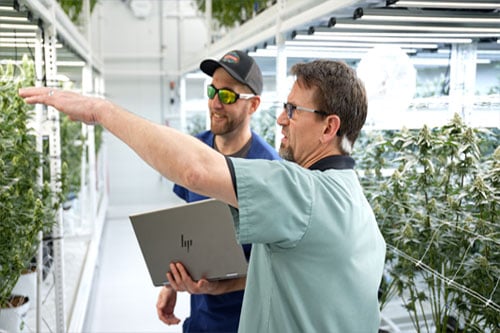
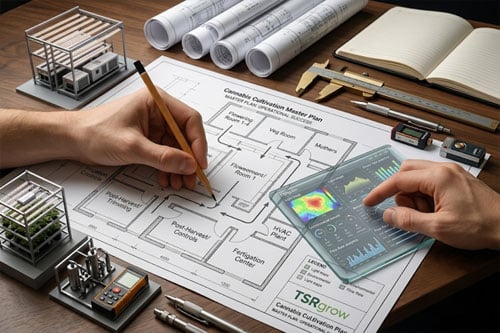
TSRgrow takes a systems-first approach to Minnesota cannabis facility planning, helping growers optimize layouts and integrate lighting, electrical infrastructure, environmental controls, racking, and cultivation technology around their production goals.
Whether you already have an architect and engineering team or need cultivation-specific guidance, TSRgrow helps align critical facility systems to support efficient workflows, regulatory requirements, scalability, and long-term operational performance.
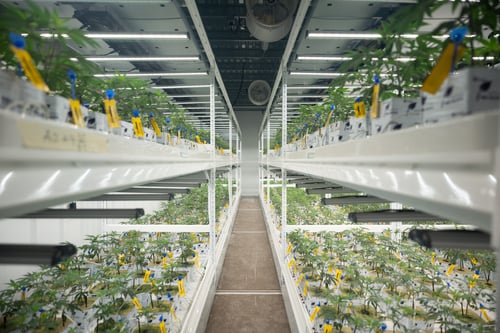
Maximize your cultivation space with purpose-built racking and table systems designed around your facility’s dimensions, production goals, and cultivation strategy.
TSRgrow helps Minnesota cannabis cultivators integrate vertical racking and cultivation tables with lighting, airflow, and overall facility infrastructure. By coordinating these systems during the planning process, operators can improve canopy utilization, optimize workflow, and make better use of available cultivation space.


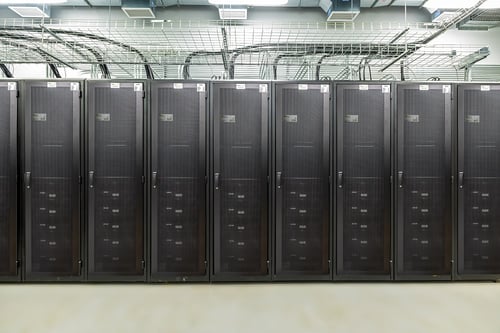
TSRgrow intelligent LED grow lighting combines Remote Power Server technology with GROWHub cultivation intelligence to deliver a more efficient, connected, and data-driven lighting platform.
LED driver failures are one of the most common causes of lighting failures in traditional grow lighting. By relocating heat-generating power supplies outside the grow room, TSRgrow Remote Power Servers help protect critical components, reduce HVAC demand, improve energy efficiency, and create a digitally connected lighting infrastructure that's easier to monitor, maintain, and manage.
GROWHub serves as the intelligence hub for your cultivation infrastructure, providing real-time monitoring, centralized control, energy insights, and cultivation data to help growers optimize performance, support compliance reporting, increase yields, and maximize profitability.
Energy efficiency should be considered during facility planning because lighting, HVAC, and environmental systems represent some of the largest operating expenses in commercial cannabis cultivation.
TSRgrow helps cannabis cultivators identify and pursue energy-efficiency rebate opportunities by guiding growers through the incentive process and assisting with required documentation and paperwork.
Through TSRgrow LED grow lighting and Remote Power Server technology, cultivators can reduce heat inside the grow environment, lower HVAC demand, and improve overall facility efficiency. Qualifying improvements may help Minnesota growers secure utility incentives and offset a portion of their lighting investment.
By combining energy-efficient technology with rebate support, TSRgrow helps growers reduce upfront costs while building more efficient, scalable cultivation facilities.


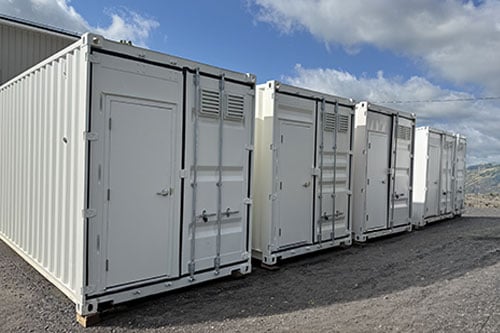
For Minnesota operators working within the 18-month preliminary approval timeline, HarvestPRO modular cultivation containers can help reduce traditional construction bottlenecks and accelerate the path to facility readiness.
From a single cultivation container to a complete multi-room facility, HarvestPRO provides turnkey, precision-controlled growing environments engineered for compliant, scalable, and consistent production.
HarvestPRO can serve as a standalone cultivation system, an expansion solution, or the foundation for a larger commercial facility, with modular units configured to support multiple stages of cultivation as your operation grows.
Have a question? We are here to help.
A cannabis cultivation facility should be planned as early as possible, ideally during the licensing process or immediately after receiving approval. Early planning allows operators to evaluate facility requirements, production goals, infrastructure needs, equipment selection, and operational workflows before construction begins. A well-planned facility helps avoid costly changes and creates a foundation for long-term success.
Minnesota cannabis license applicants generally have 18 months after receiving preliminary approval to complete local approvals, submit final plans, prepare the facility, pass the required pre-licensure inspection, and convert preliminary approval into a full business license. Applicants may request an initial six-month extension and may be eligible for a second six-month extension based on demonstrated good-faith efforts.
Key considerations include facility layout, electrical capacity, HVAC requirements, lighting, irrigation, environmental monitoring, workflow, compliance requirements, and future expansion plans. Each system impacts the others, so successful facilities are designed with an integrated approach rather than selecting individual components separately.
Common mistakes include underestimating infrastructure requirements, selecting equipment too late, designing without considering workflow, and failing to plan for future growth. Many operators focus on cultivation rooms but overlook the importance of utilities, maintenance access, operational efficiency, and technology integration.
Yes. Major cultivation systems should be considered early because lighting, racking, irrigation, HVAC, and environmental monitoring all impact facility requirements, infrastructure planning, and operational performance.
Selecting integrated equipment early helps create a unified cultivation system where technologies can communicate, share data, and work together for more efficient, consistent production.
Comparing LED grow lighting systems requires looking beyond a fixture specification sheet. While metrics such as efficiency, light output, and coverage are important, cultivators should also consider heat management, maintenance requirements, reliability, energy consumption, and how the lighting platform integrates with the overall facility.
Traditional lighting designs often focus only on fixture performance, but commercial cultivation success depends on how lighting impacts HVAC requirements, operational efficiency, data collection, and long-term scalability.
A well-designed lighting platform should support consistent production while providing the reliability and insights needed to manage a modern cultivation facility.
The space required depends on production goals, cultivation method, canopy size, facility layout, and state regulations. A successful facility plan should account for more than flowering rooms, including propagation, storage, processing areas, utilities, employee spaces, and future expansion.
Yes. Many operators convert warehouses, industrial buildings, and other commercial spaces into cultivation facilities. However, the building must be evaluated for electrical capacity, HVAC requirements, water supply, drainage, security needs, and the infrastructure required to support controlled-environment cultivation.
Yes. As the cannabis industry moves toward greater federal oversight and more regulated production standards, operators should consider designing facilities with the environmental control, consistency, traceability, and data requirements needed for future compliance expectations.
Operators pursuing GACP and cGMP readiness should plan for infrastructure that supports documentation, process controls, monitoring, and consistent production.
A well-designed cultivation facility provides the foundation needed to adapt as regulatory standards evolve.
Explore Minnesota cannabis cultivation resources for commercial growers.
Join our free masterclass to learn how to efficiently build a cost-efficient cannabis cultivation facility in Minnesota and access energy incentives.
Read MoreOptimize your Minnesota cannabis grow with smart lighting and energy rebate programs to boost yields and savings. Partner with TSRgrow for expert solutions.
Read MoreLearn why Minnesota cultivation containers are helping micro and mezzobusiness cannabis operators get to market faster with modular, scalable grow systems.
Read More
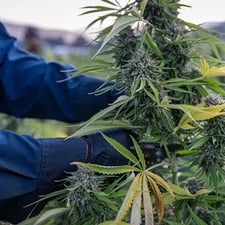
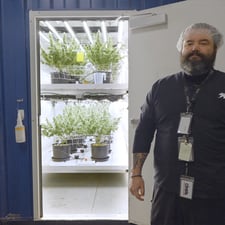
You've earned your Minnesota cannabis license. Now it's time to bring your cultivation vision to life. TSRgrow partners with Minnesota cannabis cultivators from facility planning through production, combining unified cultivation systems, intelligent LED grow lighting, and years of cultivation expertise to create efficient, scalable operations.
From infrastructure integration to intelligent cultivation technology and data-driven insights, TSRgrow helps growers establish a foundation for consistent production.